
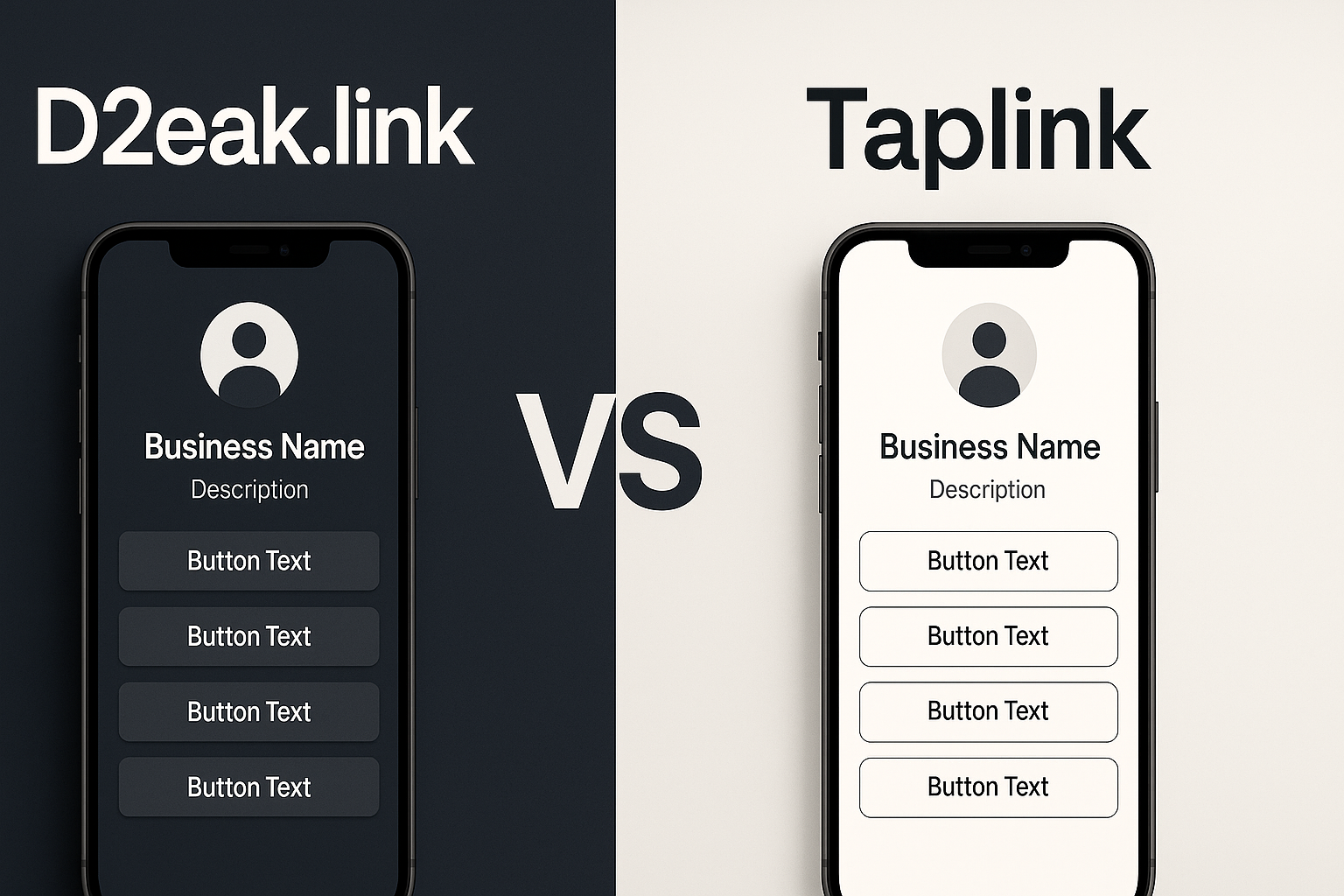
D2eak.link vs Taplink: which is better for business use?
Taplink is one of the better-known link in bio tools for businesses that want landing pages, messaging buttons, payment blocks and simple mobile funnels. It has a broad feature set and can suit businesses that want to build a more detailed mobile page without using a full website builder. D2eak.link takes a more focused route: business-friendly link pages, branded short links, QR-ready campaigns and practical measurement in one place.
The better choice depends on what you expect the tool to do. If you want a compact mobile landing page with several embedded widgets, Taplink may be attractive. If you want a clean, reliable link system that joins social profiles, QR codes, print campaigns, client work and trackable short URLs, D2eak.link is usually the stronger option.
For most small businesses, the real problem is not a lack of page widgets. It is link clutter. Different staff members create different URLs, printed material points to outdated pages, QR codes cannot be changed, and nobody knows which channel produced the enquiry. D2eak.link is built around solving that practical problem.
what Taplink does well
Taplink is useful when a business wants to create a more involved mobile page without sending visitors to a traditional website. It can support messaging links, forms, product blocks, payment options and richer page layouts. For sellers who want a mini landing page inside a social bio, that flexibility can be helpful.
A beauty therapist, for example, might use Taplink to show treatments, prices, payment options and WhatsApp contact buttons. A course provider might use it to present several offers in one mobile-first page. If the business owner is comfortable managing a slightly more complex page, Taplink can do a lot.
The trade-off is that more page-building power can create more decisions. Layout, hierarchy, widgets, forms and embedded elements all need care. Without discipline, a Taplink page can start to resemble a crowded mobile website. That can slow down the customer journey, especially when the visitor only came to book, call, order or check availability.
what D2eak.link does differently
D2eak.link is less about building a mini website and more about managing the routes customers take. That distinction is important. A business may already have a website, booking engine, menu, payment processor, CRM, review page and online store. It does not always need another page builder. It needs a clean control point that sends people to the right destination.
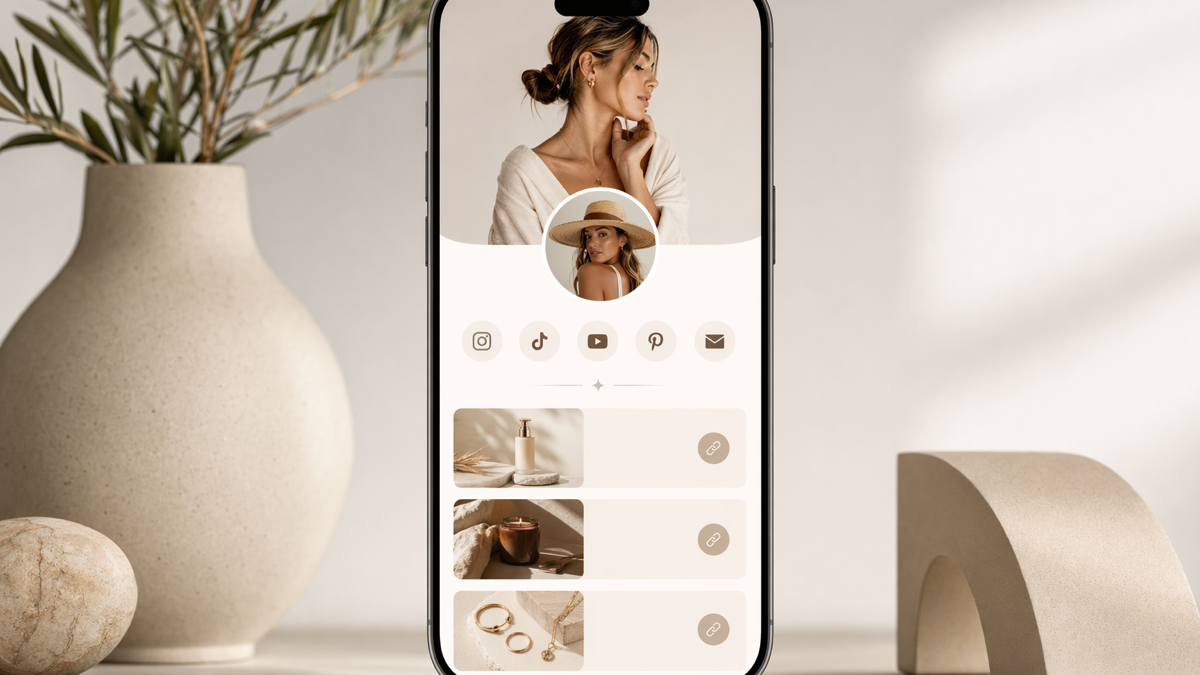
With D2eak.link, a business can create a branded link page for its main profile, separate short links for campaigns, and QR codes that point to destinations that can be updated later. The page itself stays focused. The surrounding link system helps the business avoid broken journeys and gives better visibility over what is working.
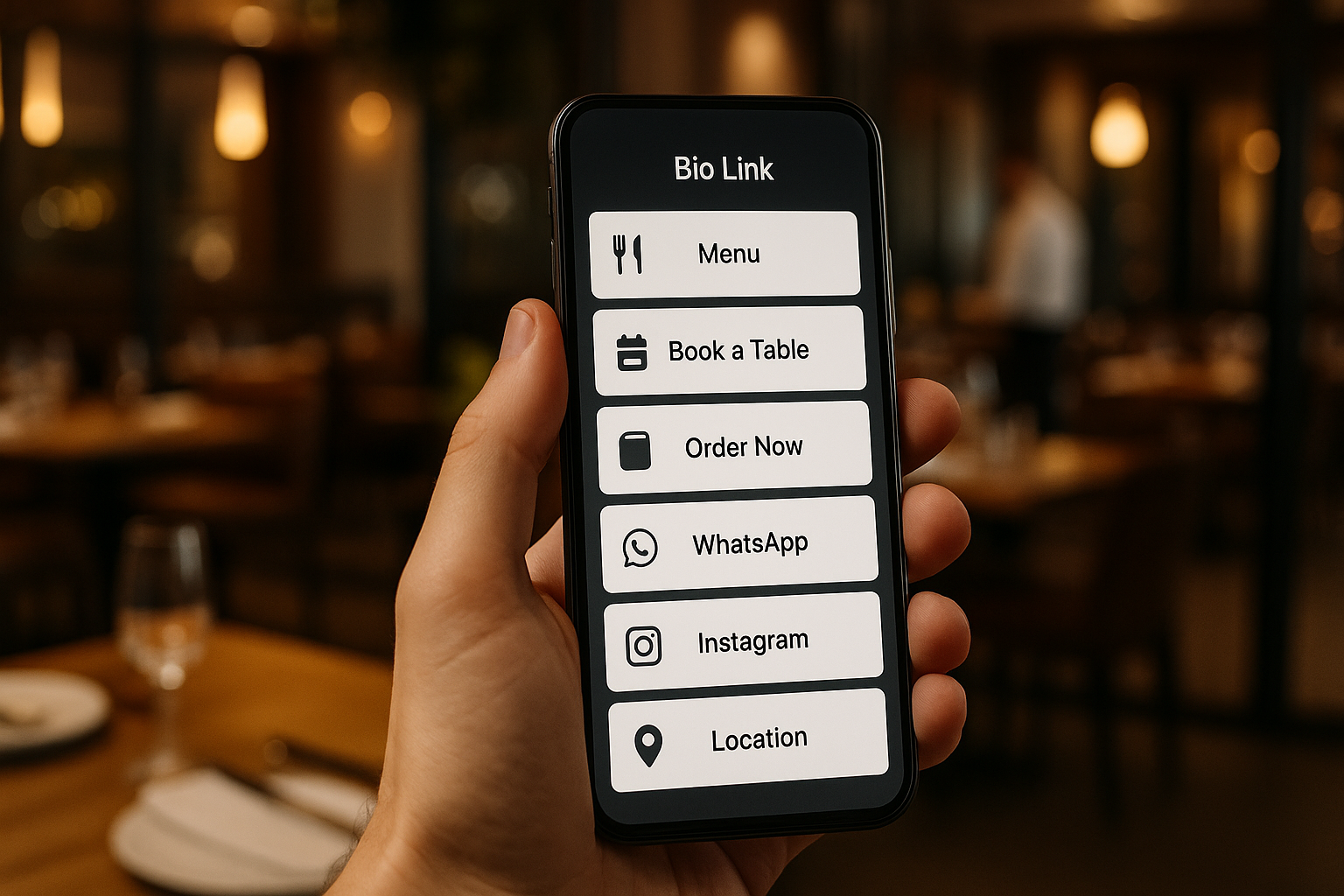
This is particularly valuable for teams that run local promotions. A restaurant may need one route for the lunch menu, one for table bookings, one for gift vouchers and one for a Christmas party enquiry form. A plumber may need links for emergency calls, quote requests, reviews and seasonal boiler service reminders. D2eak.link helps keep those routes clean.
page depth versus route clarity
Taplink can be appealing because it lets you add more to the page. D2eak.link is appealing because it makes you decide what matters. For business use, that second advantage is often underrated. A visitor on a phone rarely wants to browse every option. They want the shortest route to the action they already had in mind.
A page with ten blocks may feel comprehensive to the business owner, but it can feel like work to the customer. Clear route design means putting the most likely next step first and moving secondary actions lower down. It also means avoiding vague labels such as “learn more” when “book a consultation” or “view the menu” is more useful.
- Put urgent actions first: call, book, order, enquire or download.
- Use separate campaign links when a promotion has a specific audience.
- Remove expired offers as soon as they end.
- Test the journey on mobile data, not only office Wi-Fi.
- Use QR-specific destinations rather than sending every scan to the same homepage.
QR codes and printed marketing
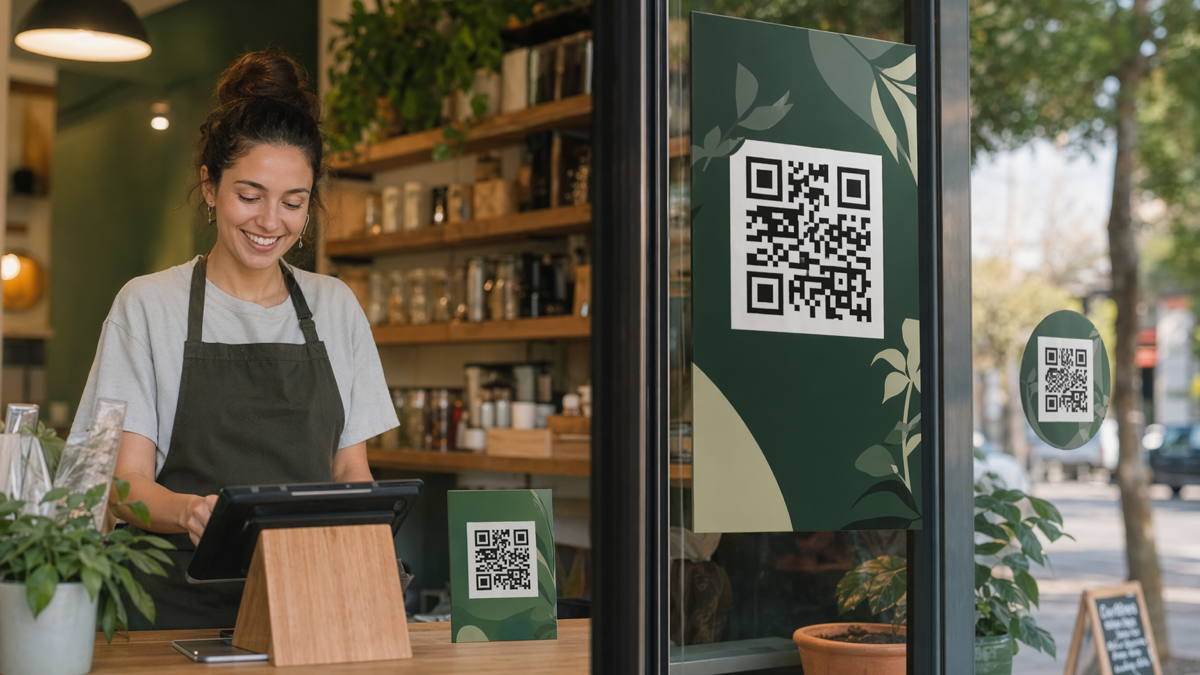
This is where D2eak.link has a clear advantage for many businesses. QR codes are no longer a novelty. They appear on table talkers, appointment cards, estate agent boards, gym posters, packaging, instruction sheets, conference stands and direct mail. The issue is not generating a code once. The issue is managing where that code sends people over time.
D2eak.link fits that job well because the QR code and the destination can be part of a broader link strategy. If a printed flyer points to a seasonal page, the destination can be changed when the season ends. If two locations run the same promotion, each can have its own short link and code. If a campaign underperforms, the business can adjust the page without scrapping every printed asset.
Taplink can receive QR traffic, but if the main use case is offline-to-online routing, a simpler link management approach often works better. The customer scanning a QR code from a poster does not need a dense mobile page. They need the promised offer, form, menu or booking route immediately.
practical example: a trades business
A heating engineer sends annual boiler service reminders by post. The card includes a QR code and a short link. In September, the destination promotes service slots before winter. In January, the same route can be updated to emergency repairs and maintenance plans. With D2eak.link, the business can keep the printed card useful for longer and track engagement from that specific mailing. That is more valuable than building an elaborate mobile profile.
analytics and decision-making
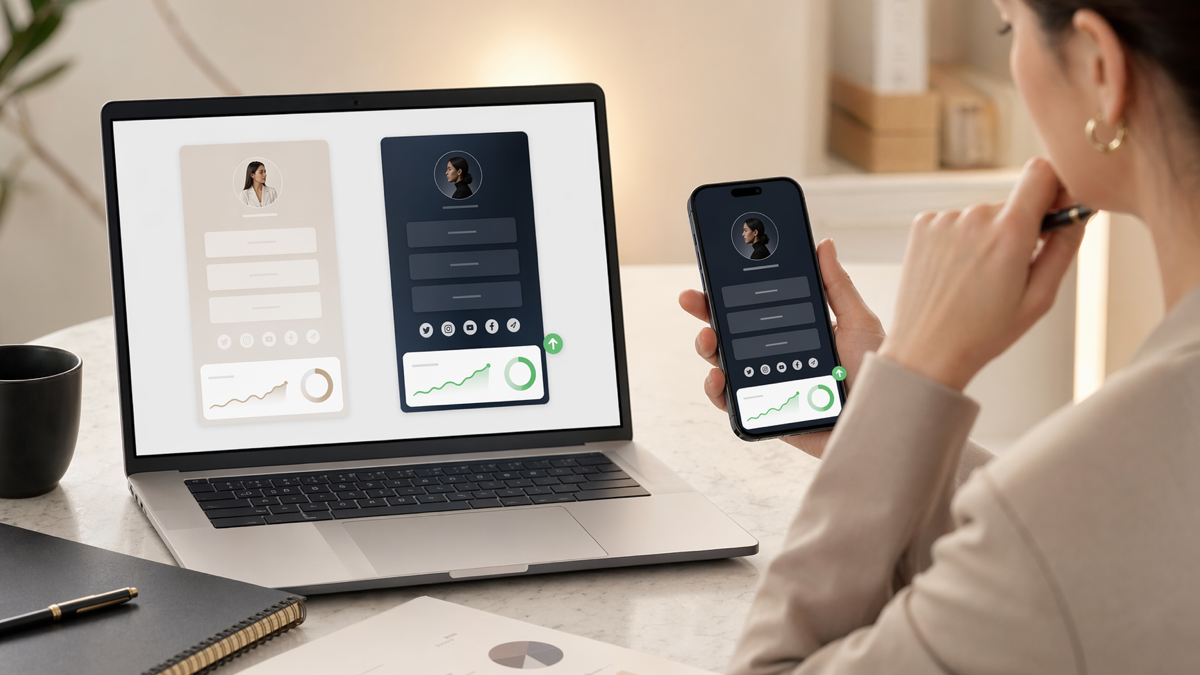
Taplink can provide useful page performance information, particularly if the page is the centre of the customer journey. D2eak.link is stronger when the business needs to compare different routes. A link in bio click, a QR scan from a shop window and a short URL from a local magazine should not all be treated as the same kind of visit.
Good link analytics help answer practical questions. Did people scan the new packaging code? Did the event landing page get attention after the talk? Are more enquiries coming from TikTok or from the email signature? Did customers click the review link after receiving a receipt? These are modest questions, but the answers guide spending and effort.
D2eak.link keeps those questions close to the links themselves. Instead of relying only on website analytics, which may hide the source of short link and QR traffic, the business can see how each route performs before the visitor even reaches the final destination.
cost of complexity
Complexity has a cost even when the software is affordable. Someone has to maintain every widget, check every button, update every offer and make sure the page still looks right on current phones. If a business only has a few hours a month for marketing admin, a simpler system can produce better results.
Taplink rewards hands-on page building. D2eak.link rewards tidy link planning. That difference should influence the decision. Businesses with a dedicated marketer may be able to make good use of Taplink’s richer page options. Owner-managed businesses, agencies running many campaigns, and teams that rely heavily on QR or short links will usually benefit from D2eak.link’s leaner approach.
when Taplink is the better fit
Taplink is a good option if you want your link in bio page to behave like a small mobile landing page with several embedded functions. It can suit businesses that do not have a website, want to present detailed offers directly inside the bio page, or need a more visual mini-page for social selling.
It is also worth considering if your audience expects to browse within the profile page itself. Some coaches, course sellers, beauty providers and digital product businesses may prefer that experience, especially when their sales process is light and social-first.
when D2eak.link is the better fit
D2eak.link is better when your business already has destinations to send people to and needs a dependable way to manage those routes. It is especially suitable for businesses using QR codes, printed material, events, local campaigns, client campaigns or several social profiles.
- Choose D2eak.link for branded short links and QR-led marketing.
- Choose it when the final destination may change after printing.
- Choose it when you need separate routes for campaigns, locations or clients.
- Choose it when a clean link page is more useful than a mini website.
- Choose it when you want simpler maintenance and clearer reporting.
final verdict
Taplink is capable and flexible, but flexibility is not the same as fit. For a business that wants a mini mobile page with embedded functions, it can work well. For a business that wants practical link control across social, print, QR, events and campaigns, D2eak.link is the better choice.
The safest decision is to start with the journey. If the page itself needs to host most of the experience, Taplink deserves attention. If the page is a routing point within a wider marketing system, D2eak.link is more efficient, easier to maintain and more useful over time.
Create your D2eak.link page and build a cleaner, measurable route from every profile, QR code and campaign link.
A simple migration plan is to list your current public links, group them by purpose, and create a D2eak.link route for each high-value journey. Start with the main bio link, then your most visible QR code, then any printed or paid campaign links. You do not need to rebuild everything at once. Replace the messiest routes first and measure the improvement.
Related reading
If this topic is useful, these related D2eak.link guides are worth reading next: