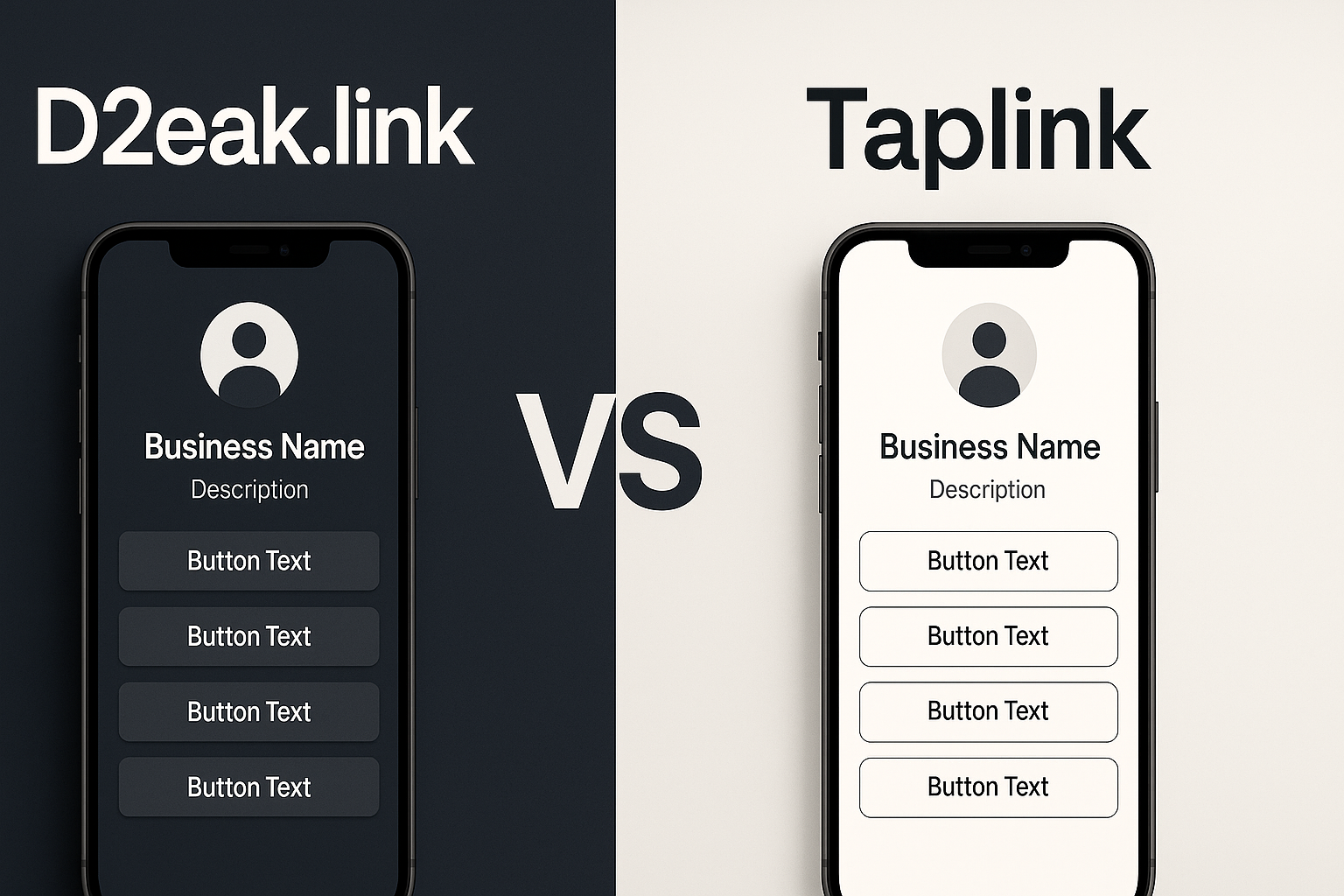


Linktree vs D2eak.link: which converts better in 2026?
Most bio link debates start in the wrong place. People compare templates, button colours and whether one page looks a little cleaner than the other. Those details matter, but they are not the whole conversion story.
A bio page converts when it helps a visitor choose the next action without making them think too hard. That visitor might have arrived from Instagram, TikTok, a printed menu, a podcast mention, a WhatsApp message or a flyer on a counter. If the page gives them a clear path, captures the click and makes later optimisation possible, it is doing its job.
Linktree helped make the bio link page familiar. For many creators and small businesses, it was the first simple way to put more than one destination behind a single profile link. D2eak.link takes a slightly wider view. It treats the bio page, short links, QR codes and analytics as parts of the same conversion system.
So which one converts better in 2026? The honest answer is: the tool that matches the job. For a basic personal link list, Linktree can be enough. For campaigns where you care about tracking, local marketing, branded links and offline-to-online journeys, D2eak.link usually gives you more useful control.
What conversion means for a bio link page
Conversion is not always a purchase. For a photographer it might be a WhatsApp enquiry. For a cafe it might be a menu scan followed by a booking. For a coach it could be a calendar click. For a band it might be a presave, ticket sale or mailing list signup.
The mistake is treating every click as equal. A visitor who taps your latest YouTube video is doing something different from someone who taps "book a call". A visitor who comes from a QR code on a printed flyer may behave differently from someone who comes from your Instagram profile.
Useful conversion signals
- Clicks on the primary button, not just total page visits.
- Traffic source, such as Instagram profile, printed QR, email signature or poster.
- Device type, especially when your next step is a form or checkout.
- Location patterns for local businesses and event campaigns.
- Repeat clicks from the same campaign over time.
If your tool cannot help you separate those signals, you end up optimising by mood. One week you move a button because it "feels buried". The next week you change the headline because someone said it was too salesy. Better tracking does not remove judgement, but it gives your judgement something solid to work with.
Where Linktree works well
Linktree is good at the simple version of the job. You create a page, add buttons, put the link in your bio and move on. That ease is part of its appeal. If you are a creator with five links and no real need to understand campaign performance, it can be a quick fix.
It also benefits from name recognition. Many social media users understand what a Linktree page is before they tap it. That familiarity can reduce friction, especially for creators whose audience is used to browsing multiple links from a profile.
Good use cases for Linktree
- A creator who wants a quick list of social profiles, shop links and latest content.
- A musician who only needs to point fans to Spotify, Apple Music and tour dates.
- A personal brand testing whether a bio page is useful at all.
- A small project where analytics are nice to have, not central to the work.
The weakness appears when the page becomes part of a serious campaign. A list of buttons can only take you so far. Once you need branded short links, cleaner QR journeys and campaign-level tracking, the simple link list starts to feel cramped.
Where D2eak.link has the edge
D2eak.link is built around the idea that one link often has to work in several places. The same business might need a bio page for Instagram, a QR code for a poster, a short link for a WhatsApp broadcast and a campaign link for a paid ad. Those should not live in separate little boxes.
When the tools sit together, you can build a cleaner path. A printed QR code can lead to a short, branded link. That link can send people to a focused landing page or bio page. The page can push one main action. The analytics can show which source brought the click.
What this changes in practice
- You can use one branded link style across bio, print and messages.
- You can create QR codes that are easier to recognise and track.
- You can keep campaign links shorter and less suspicious-looking.
- You can compare online and offline traffic without rebuilding the whole setup.
- You can tidy your funnel instead of adding more disconnected tools.
That matters because conversion often drops in the handoff. Someone sees a poster, scans a code, lands on a messy page, sees six options and leaves. Or they tap a bio link from a Reel, land on a page that was last updated three months ago, and cannot find the thing mentioned in the video. D2eak.link makes it easier to keep the journey specific.
The 2026 conversion test: clarity beats choice
Bio pages used to be treated like mini directories. The thinking was simple: if you have ten things to promote, put ten buttons on the page. That approach now feels dated. People are moving quickly, social traffic is impatient, and mobile attention is thin.
A high-converting page usually has one obvious next step and a few supporting links. The primary button should match the promise that brought the visitor there. If your Instagram post says "book spring portraits", the first button should not be "visit my website". It should be "book spring portraits" or something close to it.
A simple comparison
Imagine two local fitness coaches promoting a January challenge. The first uses a generic bio page with buttons for classes, recipes, YouTube, testimonials, merch and contact. The challenge signup is somewhere in the middle.
The second uses a D2eak.link bio page with a headline for the January challenge, one primary signup button, a short proof section and a secondary WhatsApp option for questions. The same campaign also has a QR code on flyers at a partner cafe and a branded short link used in messages.
The second setup is more likely to convert because it removes hesitation. It also produces better feedback. If the cafe QR gets scans but few signups, the coach can adjust the landing message. If Instagram clicks convert better, they can put more effort into Reels. The first coach might only know that "the link got some clicks".
Brand trust matters more than people admit
People have become wary of unfamiliar links. That is not paranoia; it is learned behaviour. A messy URL in a bio or printed on a flyer can look temporary, spammy or simply forgettable. A branded short link feels more deliberate.
This is where D2eak.link can help businesses that care about trust. A clean short link is easier to say aloud, easier to print and easier to recognise later. The same is true for QR codes. If the QR code appears beside a readable short link, people who do not want to scan can still type the address.
Small trust details that affect clicks
- Use a short link that looks connected to the brand or campaign.
- Keep button labels specific, such as "book a table" rather than "learn more".
- Remove old links that no longer match current offers.
- Put the main action above less urgent links.
- Use consistent wording between the social post, QR code and landing page.
These are not dramatic changes. They are the sort of small fixes that make a page feel looked after. People notice that, even if they would never describe it in those terms.
Analytics: the difference between busy and useful
Lots of dashboards can show clicks. Fewer setups make the numbers easy to act on. For conversion work, you need to know which link, page or QR code sent the visitor. You also need enough context to decide what to change next.
D2eak.link is stronger when you want campaign clarity. If you run a restaurant promotion, you can separate QR scans from table cards, links from Instagram Stories and links from a local partner. That gives you a cleaner read on what is actually working.
Questions your analytics should answer
- Which placement produced the most visits?
- Which placement produced the best next-step clicks?
- Did mobile visitors find the primary action quickly?
- Did a printed campaign keep working after the first week?
- Which link should be retired, renamed or moved?
Without that view, teams often reward the loudest channel rather than the best one. A social post might bring more clicks, but a QR code on a receipt might bring better buyers. A good setup helps you see the difference.
Which one should you choose?
Choose Linktree if you need a quick personal link list and do not plan to measure much beyond basic clicks. It is familiar, easy to set up and fine for light use.
Choose D2eak.link if your links are tied to campaigns, bookings, local promotions, QR codes, offline materials or branded short links. It is the better fit when the link is not just a convenience, but part of how people move from interest to action.
A practical rule
If your page only answers "where else can people find me?", a simple link list is enough. If your page needs to answer "which campaign brought this person, and what should they do next?", use a setup built for tracking and conversion.
How to test fairly
Do not judge either tool from a messy page. Build a fair test before deciding. Use the same offer, the same button order and the same traffic source for at least a week. Then compare primary button clicks, not just page visits.
- Pick one campaign, such as a booking offer or product launch.
- Write one clear headline that matches the traffic source.
- Use one primary CTA above the fold.
- Keep supporting links below the main action.
- Check results after enough traffic to spot a pattern.
If D2eak.link also helps you track QR codes, short links and social traffic in one place, factor that into the decision. A slightly better-looking page is not worth much if it leaves you guessing about the funnel.
Start with the page people actually need
The best bio page is rarely the busiest one. It is the page that respects the visitor's intent. If they came from a post about appointments, show appointments. If they scanned a flyer for a discount, show the discount. If they tapped from a profile after watching a product video, put that product first.
D2eak.link is built for that kind of practical setup: bio pages, short links, QR codes and tracking that work together. If you want to replace a generic link list with a page you can actually improve, create your account and build the first version today.
Create your D2eak.link account and set up a bio page that is easier to track, test and improve.
The bottom line
Linktree is still useful for simple link lists. D2eak.link is stronger for businesses and creators who want links to do measurable work. In 2026, conversion is less about having a neat page and more about building a clean path from attention to action.
If you care about QR codes, branded links, campaign tracking and better decisions, D2eak.link is the better long-term choice. Start simple, measure what matters, and keep removing anything that distracts from the next click.
Related reading
If this topic is useful, these related D2eak.link guides are worth reading next: