
Local lead generation is often hiding in plain sight
Most trades businesses already have decent local visibility. Vans sit outside houses. Boards go up on scaffolding. Uniforms move through estates, high streets, offices and industrial units. The problem is that visibility often stops at recognition. Someone sees the name, thinks "I should remember that", and then forgets by the time they need help.
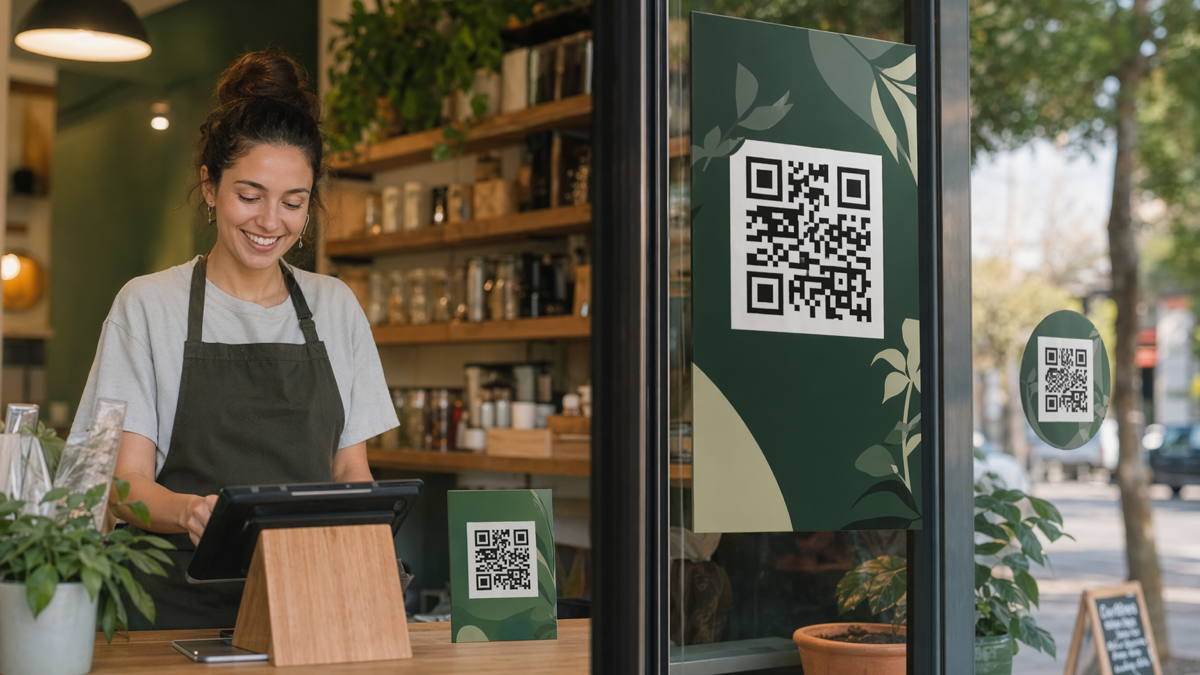
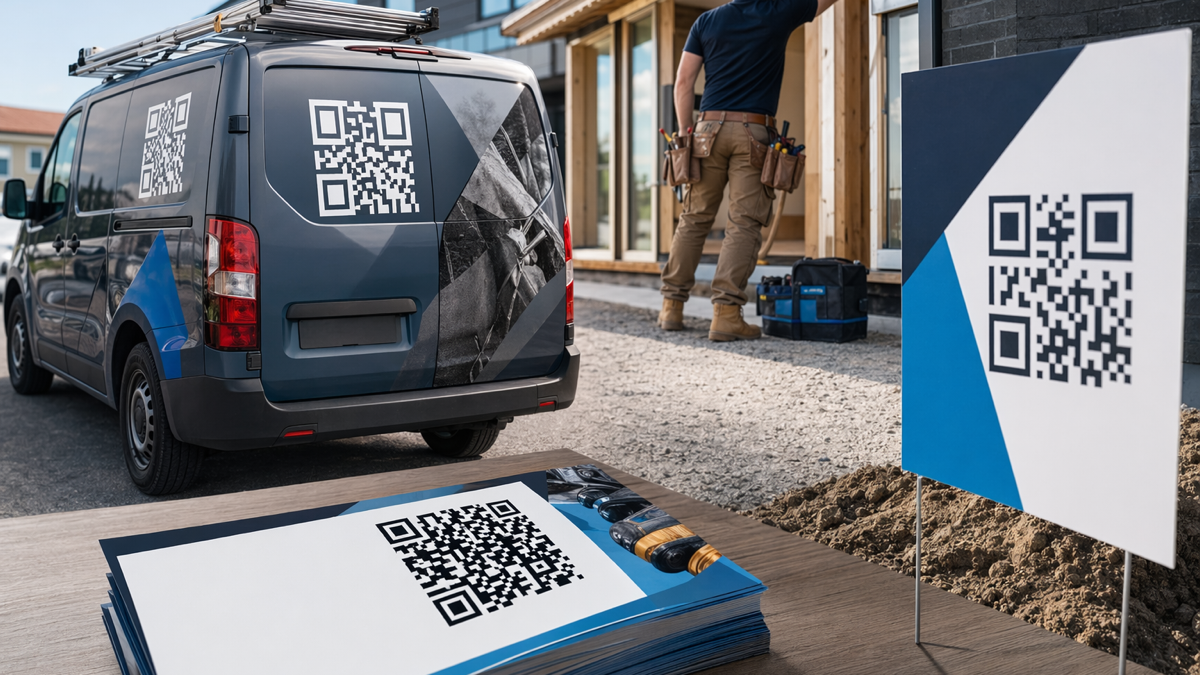
A QR code gives that moment somewhere to go. It turns a van, a site board, a leaflet, a quote folder or a boiler service sticker into a direct route to an enquiry form, booking page, review profile or offer. Used properly, it removes the small bit of friction that stops people acting while the need is fresh.
That matters for trades because local jobs are rarely won by brand awareness alone. A homeowner may need a roofer because a tile has slipped. A landlord may need an electrician before a tenant moves in. A shop owner may need a plumber after a leak. They want proof, proximity and a simple next step.
The mistake is treating QR codes as decoration. A square slapped on a van with no reason to scan will not do much. A QR code connected to a useful, fast, local landing page can quietly generate leads for months.
Start with the lead you actually want
Before printing anything, decide what a good scan should become. Do you want quote requests, emergency call-outs, reviews, maintenance bookings, WhatsApp messages, brochure downloads or repeat servicing reminders? Each answer needs a different page.
A generic homepage is usually the weakest destination. It asks the visitor to work out where to click next. People scanning from a driveway or pavement are not settling in for a long browse. They are using a phone, often while distracted, and they want a short path.
For a trades business, useful QR destinations include:
- A "request a quote" page with job type, postcode, photos and preferred contact time.
- A "book a call-back" page for non-urgent enquiries.
- An emergency page with tap-to-call and clear opening hours.
- A review page showing recent local jobs and customer comments.
- A seasonal offer, such as boiler servicing before winter or gutter clearing in autumn.
- A landlord compliance page for EICRs, gas safety checks or planned maintenance.
The scan should match the context. A QR code on a boiler sticker should not go to a broad "all services" page. It should lead to a service reminder, repair request or annual check booking. A code on a roofing scaffold board should show roof repair work, local before-and-after examples and a quote button.
Put codes where trust is already being built
QR codes work best when someone has already seen a reason to trust you. That reason might be a neat van, a tidy job site, a recommendation from a neighbour, a professional invoice or a well-kept uniform. The code then captures the interest before it goes cold.
Vans and vehicle graphics
A van is a moving advert, but most people cannot type a web address while walking past. A QR code on the rear door or side panel gives people a quick route when the vehicle is parked. Keep it large enough to scan from a sensible distance. Tiny codes are fine on paper, not on a van parked across the street.
Use a short instruction next to it. "Scan for a local quote" is better than just displaying the code. If you handle emergency work, split the message carefully. A QR code is not a replacement for a phone number in a genuine emergency, but it can help people submit details for non-urgent work.
Site boards and scaffold banners
When a neighbour sees work happening nearby, interest is already high. They know you operate in the area. They can see the team, the equipment and the way the site is kept. A QR code on a board can take them to a page that says, in effect, "we are working near you and can quote for similar jobs".
That page can include the type of work being carried out, other nearby examples, insurance details, accreditations and a short enquiry form. Keep it specific. "Roof repairs in south Bristol" will feel more relevant than a broad national-looking page.
Invoices, quotes and leave-behind cards
Printed paperwork still has value. A quote can include a QR code that opens the acceptance page or lets the customer ask a question. An invoice can link to payment, review collection or a maintenance plan. A leave-behind card can send people to a referral offer.
This is useful because the customer may not act immediately. The QR code remains on the kitchen counter, noticeboard or folder. A simple scan is easier than searching through old emails.
Equipment stickers and service labels
Boilers, fuse boards, air conditioning units and alarm panels are natural places for service reminders. A sticker with a QR code can link to a booking page that already explains the equipment type and service interval.
Do not overcomplicate it. The page should answer: who fitted or serviced this, when should it be checked, what does it cost, and how do I book?
Make the landing page feel local and useful
The page behind the QR code is where most campaigns succeed or fail. A code can get the scan, but the page has to earn the enquiry. Trades customers are often wary. They have heard stories about no-shows, vague pricing and poor workmanship. Your landing page should reduce that worry quickly.
Useful elements include:
- Clear service area by town, borough, postcode or neighbourhood.
- Photos of real work rather than generic stock images.
- Recent reviews, ideally naming the area or job type.
- Trade registrations, insurance notes and guarantees where relevant.
- A short form that works well on a phone.
- Tap-to-call for urgent jobs.
- Opening hours and expected response times.
Short forms usually win. For an initial enquiry, ask only what you need: name, phone or email, postcode, job type, rough timing and a photo upload if helpful. You can collect the rest during the call.
If you serve different audiences, build separate pages. Homeowners, landlords, letting agents, facilities managers and shop owners care about different things. A landlord might want certificates, scheduling and repeat visits. A homeowner may want reassurance, photos and a polite team that cleans up.
Use different QR codes for different placements
One of the useful parts of trackable QR codes is that you can see which placements are working. If every code points to the same untracked URL, you will never know whether leads came from the van, the scaffold board, the invoice or the leaflet.
Create separate codes for each use. Name them clearly so the data makes sense later. For example:
- van-rear-door-2026
- scaffold-board-roofing-north-leeds
- boiler-service-sticker
- invoice-review-request
- letting-agent-maintenance-pack
That naming discipline sounds boring until you need to make decisions. If the van code gets plenty of scans but few enquiries, the page may need work. If the boiler sticker gets fewer scans but a high booking rate, it may be worth rolling out to every installation. If a leaflet campaign gets no scans at all, stop printing it or change the offer.
Good tracking also helps with local experiments. A paving company could test two neighbourhoods with different leaflets. A heating engineer could test "book a boiler service" against "avoid winter breakdowns". A cleaning contractor could compare QR codes on door hangers, van graphics and building reception cards.
Practical QR campaigns for different trades
Different trades have different moments of intent. A single QR idea will not fit everyone. The best campaigns connect to the job cycle.
Plumbers and heating engineers
Boiler stickers, service cards and invoices are strong placements. Link them to annual service booking, repair triage or landlord gas safety checks. If you offer emergency plumbing, keep a phone number visible too. The QR page can help collect photos, access notes and location details before the call-back.
Electricians
Fuse board stickers can link to EICR reminders, consumer unit upgrades, landlord certificates or small works booking. For commercial clients, a code on completion paperwork can link to maintenance contracts or compliance records.
Roofers
Scaffold banners are valuable because neighbouring houses may have similar roofs and similar problems. Link to a local roof repair page with photos of completed work, insurance details and a form that allows photo upload. A "noticed a slipped tile?" message can work well after storms.
Gardeners, landscapers and exterior cleaners
Before-and-after work is easy to understand visually. A QR code on a site board or postcard can link to a small gallery, quote form and seasonal service list. For repeat work, add codes to maintenance schedules so clients can request extra visits.
Builders and specialist contractors
Longer projects create longer local exposure. Boards and hoarding can link to case studies, planning-friendly project notes and a consultation form. People considering an extension often watch nearby projects closely before making contact.
Avoid the common QR mistakes
Most QR failures are simple. The code is too small, the page is too slow, the promise is vague, or nobody checks the results. Fixing those basics puts you ahead of many local competitors.
Watch out for these problems:
- Printing a code before testing it on several phones.
- Sending every scan to the homepage.
- Using a landing page that loads slowly on mobile data.
- Putting codes on moving vehicles where people cannot scan safely.
- Forgetting a short line of text that explains why to scan.
- Using one code everywhere and losing all placement data.
- Letting old codes point to expired offers or broken pages.
Also think about the physical setting. A code on a van should be bold and simple. A code on paperwork can be smaller and more detailed. A code on a site board should have enough contrast to scan in poor light. Glossy materials can reflect sunlight and make scanning harder.
What to measure once the codes are live
Scans are useful, but they are not the whole story. A hundred scans that produce one weak enquiry may be less valuable than ten scans that produce three booked jobs. Track the full path where you can.
Useful numbers include:
- Scans by placement.
- Scans by time and day.
- Enquiry form starts and completions.
- Calls from the landing page.
- Booked jobs by source.
- Average job value by source.
- Repeat bookings from service stickers or invoices.
You do not need a complicated dashboard to start. Even a simple monthly check can show which codes deserve more attention. The point is to connect offline visibility with actual enquiries, not just to admire scan numbers.
A simple first campaign
If you want a low-risk starting point, choose one service, one placement and one landing page. For example, a heating engineer could create a boiler service QR code for invoices and service stickers. The page would include pricing, coverage area, available months, a short booking form and a phone number.
Run it for a month. Check scans, enquiries and bookings. Ask customers if the scan was easy. Then improve the page or add the code to more materials. This is better than printing QR codes on everything at once and having no idea what worked.
The same approach works for roof inspections after bad weather, patio cleaning in spring, EICR renewals for landlords or gutter clearing before winter. Pick a real customer need and build the scan around it.
Turn local attention into booked work
Trades businesses do not need gimmicks. They need more of the right local people to make contact at the moment they are interested. QR codes can help because they connect the physical signs of your work with a measurable next step.
If your vans, boards, stickers and paperwork already get seen, make them easier to act on. Create a specific page, use a trackable code, test it properly, and review the results. Small improvements here can compound because the same code keeps working every time someone sees it.
To create trackable QR codes and short links for your next local campaign, set up a D2eak.link account and build separate links for each placement before you print anything.
Final thought
The best QR code for a trades business is not the flashiest one. It is the one that helps a nearby customer take the next step without thinking too hard. That might be a quote request from a scaffold board, a boiler service booking from a sticker, or a referral scan from a happy customer's invoice. Make the path clear, and your existing local presence starts working harder.
Related reading
If this topic is useful, these related D2eak.link guides are worth reading next: