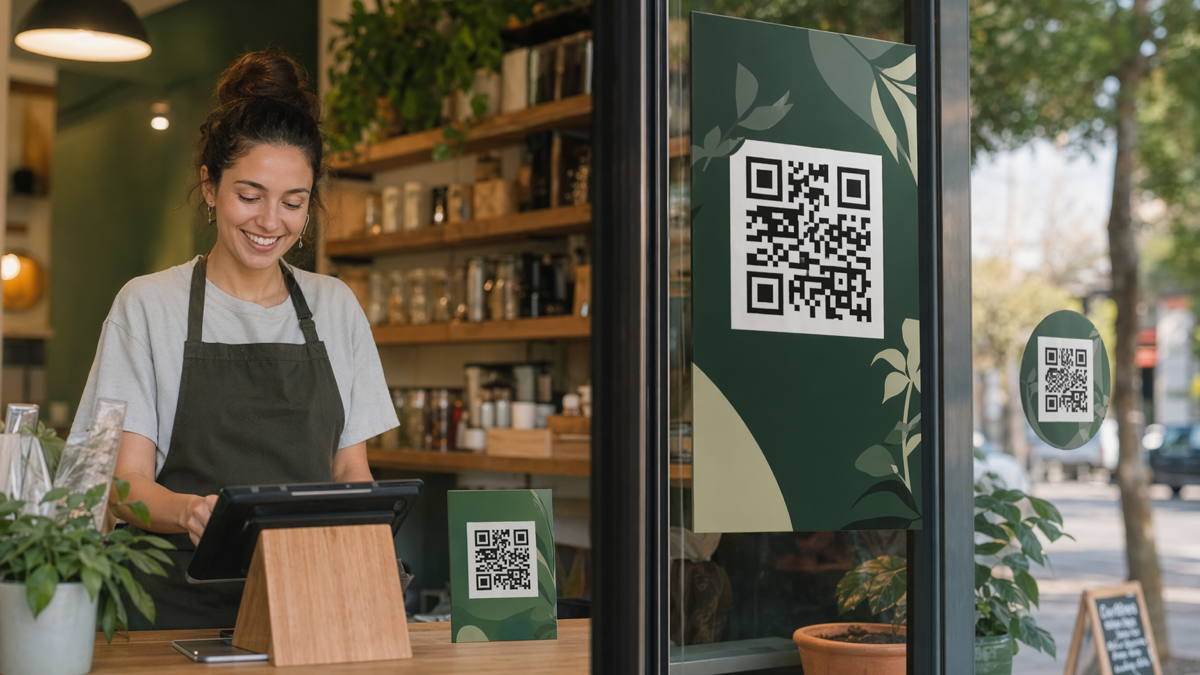

Restaurants often use QR codes as a replacement for paper menus, then stop there. That misses the better use case. A QR code can bring a diner back after they leave, help a takeaway customer order again, collect a review while the meal is still fresh in their mind, or send regulars to an offer that is easier to redeem than a paper voucher. The code itself is not magic. The placement, promise and landing page do the work.
The details differ by business, but the pattern is the same: make the next step obvious, keep the destination editable where possible, and measure the channels that matter. A tidy setup beats a crowded one because customers are busy and impatient.
start after the meal, not only before it
- Receipts can point to reorder pages.
- Packaging can point to a saved favourite or delivery menu.
- Table cards can promote loyalty sign-ups.
- Window posters can promote collection offers.
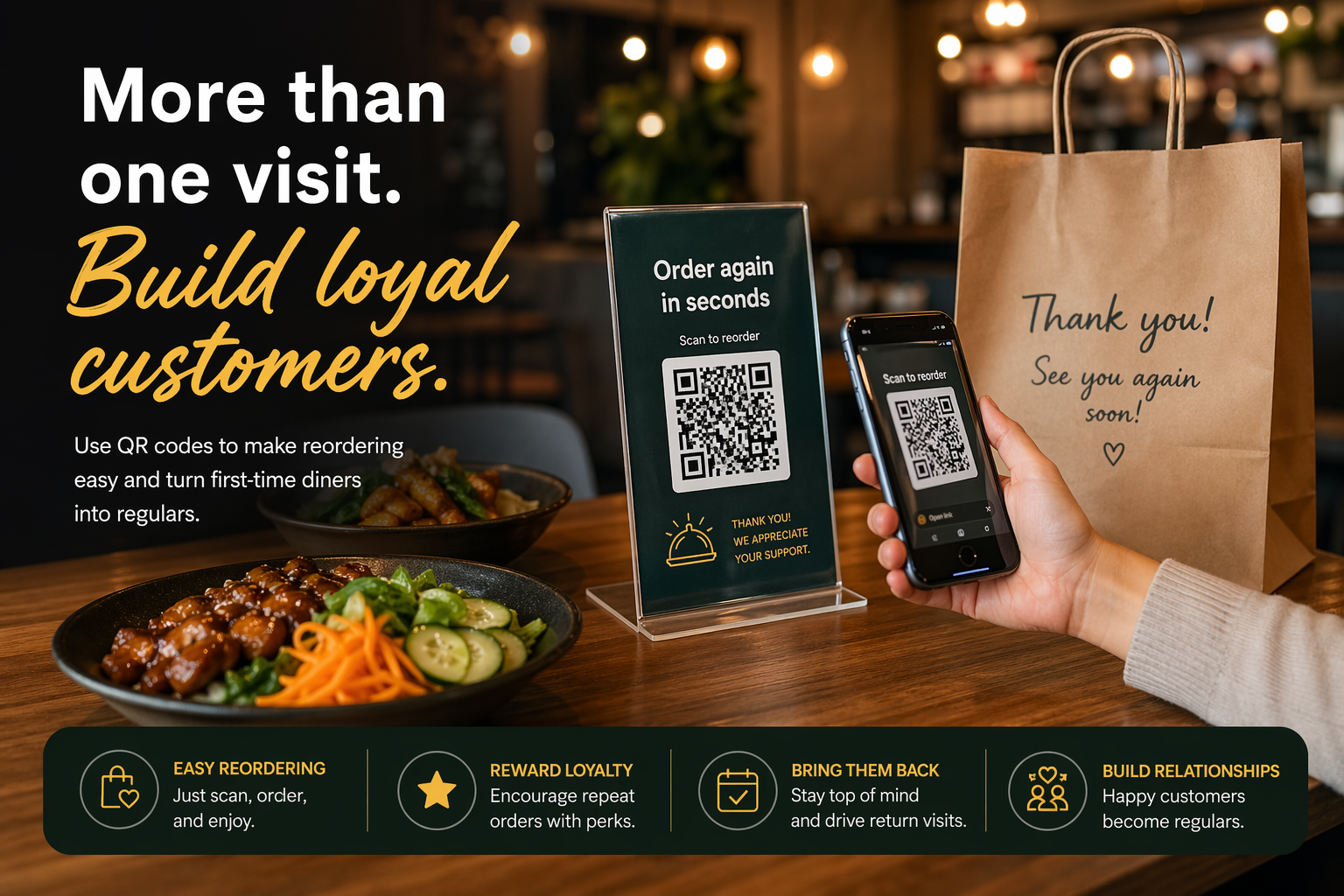
Menu QR codes solve an operational problem. Repeat-order QR codes solve a revenue problem. The best placements often appear after the customer has already decided they like the food: on the receipt, takeaway bag, pizza box, loyalty card or follow-up flyer.
That timing matters. A customer scanning a menu is trying to eat now. A customer scanning a receipt may be open to saving a reorder link, joining a loyalty list or claiming a next-order offer. Treat those as different moments.
give people a reason to scan
- Order again faster next time.
- Save our collection menu.
- Get a free side on your next order.
- Tell us how tonight went.
"Scan me" is weak copy. It tells people what to do but not why. A better prompt names the benefit: order again in 30 seconds, get 10% off your next collection, join the lunch club, leave a review and help the team. The value should be immediate and believable.
Restaurants should avoid offers that are too clever. Diners are not solving a puzzle. If the scan leads to a discount, say so. If it leads to a loyalty stamp, say so. If it opens the takeaway menu, make that obvious.
use dynamic codes for menus and offers
Menus change. Prices change. Delivery platforms change. Staff discover typos after printing. Dynamic QR codes let the restaurant update the destination without binning table cards or stickers. That is especially useful when different branches, menus or seasonal specials are involved.
Dynamic codes also make testing easier. A restaurant can compare a receipt offer against a table card offer and see which one drives more scans. Without separate tracking, the team may only know that the QR code had some activity, which is not enough to improve the next campaign.
build repeat ordering paths
- Put the code where people pause, such as the receipt or bag seal.
- Use one code for dine-in loyalty and another for takeaway reorder.
- Send scanners to the most direct ordering destination.
- Keep the page fast on mobile data.
A repeat-order QR code should not send people to the homepage if the next step is ordering. Send them to the ordering page, saved menu, WhatsApp order flow or app download only if the app is genuinely helpful. Every extra step lowers the chance they finish.
For takeaways, the best use may be a simple branded short link printed on bags and receipts. People can scan it now or type it later. A clean link also works in SMS and social posts, so the restaurant is not locked into one channel.
collect reviews without annoying people
QR codes can help with reviews, but the timing and wording matter. A small prompt on the receipt after a good service moment usually feels better than a large table sign begging for five stars. Keep the language human and make it easy to give private feedback too.
If every review QR code points to a public review page, unhappy customers may vent there first. A better flow can offer a quick feedback form, then invite satisfied customers to review publicly. Keep it honest. Do not pressure staff to filter criticism in a way that feels manipulative.
measure orders, not only scans
A scan is a sign of interest. It is not a sale. Restaurants should connect QR campaigns to outcomes where possible: completed orders, loyalty sign-ups, review submissions or bookings. If that is not possible, at least compare scan volume by placement and time.
Weekly review is enough for most independent restaurants. Look for obvious signals. If receipt scans happen mostly on Fridays, promote weekend reorders. If table card scans are low, change the wording or move the card. If packaging scans are strong, print the link more prominently.
put it into practice
The safest approach is to start with one high-value action and build around it. Do not add links or codes because the tool allows it. Add them because they help a real customer do something useful.
If you want one place to create branded short links, editable QR codes and simple bio pages, create a free D2eak.link account and build your first campaign in a few minutes.
Review the setup after real people have used it. Remove what nobody taps. Rewrite anything that causes confusion. Keep the links and codes that clearly move people towards bookings, orders, enquiries or repeat visits.
where to place restaurant QR codes
Receipts are underrated because they arrive at the moment a customer has already paid. The meal is still fresh in their mind, and the receipt often gets handled again at home or at the office. A small prompt for reorder, loyalty or feedback can work well there, especially for takeaway and lunch trade.
Packaging is stronger for repeat ordering than for general branding. A sticker on a bag, box or cup can say "reorder this next time" and point straight to the collection menu. Do not waste that scan on a broad homepage. The customer already knows the restaurant; they need the fastest route back to the food.
Table cards work when the promise fits the seated moment. Joining a loyalty club, viewing allergens, ordering another round or seeing desserts can make sense. Asking someone to download an app before the first course usually does not. Keep the action close to what the diner is doing right now.
campaign ideas restaurants can run this month
A weekday lunch campaign can use a QR code on receipts that points to a simple offer for the next visit. The copy might say "Scan for next week’s lunch deal". The landing page should show the offer first, then the menu. If customers have to hunt for the deal, the scan loses momentum.
A takeaway campaign can put a dynamic QR code on packaging that points to a direct ordering page. Use a separate code for each branch or delivery area if the restaurant has more than one location. That makes it easier to see which area responds and whether collection incentives beat delivery discounts.
A review campaign can run for two weeks after a menu change. Staff can circle the QR code on the receipt for tables that gave positive feedback in person. The page can ask one quick private question before offering a public review link. That gives the owner useful comments without making the customer feel pushed.
keep staff involved
Restaurant campaigns fail when staff do not know what the code does. If servers, counter staff and drivers cannot explain the benefit in one sentence, customers will not care either. Before printing, show the team the page and give them plain wording they can use.
Staff can also spot friction quickly. They will hear when customers say the page is slow, the offer is confusing or the code is hard to scan under the lights. That feedback is more useful than a dashboard on its own. The best QR campaigns treat staff comments and scan data as two parts of the same picture.
avoid the app trap
A restaurant app can be useful for large chains, but independent restaurants should be careful. If the first QR scan asks a customer to install an app, create an account and accept notifications before seeing value, many will leave. A web ordering page, loyalty form or saved short link is often a lower-friction first step.
If you do use an app, make the QR destination smart. Show the menu or offer first, then invite the customer to save the app after they understand the benefit. The scan should feel like service, not homework.
make the landing page match the kitchen reality
The page behind the code should reflect what the restaurant can actually fulfil. If the kitchen is closed between lunch and dinner, say so before someone starts an order. If delivery is not available outside a small radius, make that clear. Repeat orders grow when the experience feels reliable, not when the promise is bigger than the operation.
Photos help, but only if they support the order. A huge gallery can slow the page and distract from the basket. Use a few good images, clear categories and a visible reorder or booking action. The customer came through a QR code, so assume they are on a phone and want a short path.
quick check before publishing
Before sending the page or code live, open it on a phone, follow the main action, and ask whether a first-time visitor would understand the next step without extra explanation. If the answer is no, cut one thing or rewrite the prompt before promoting it.
Related reading
If this topic is useful, these related D2eak.link guides are worth reading next: