
Why QR codes suit property marketing
Property marketing still has a physical side. People walk past boards, pick up flyers, glance into branch windows and notice cards in cafes. The problem is that physical interest often disappears before it becomes an enquiry. Someone sees a board while walking the dog, thinks the house looks interesting, then forgets the address by the time they get home.
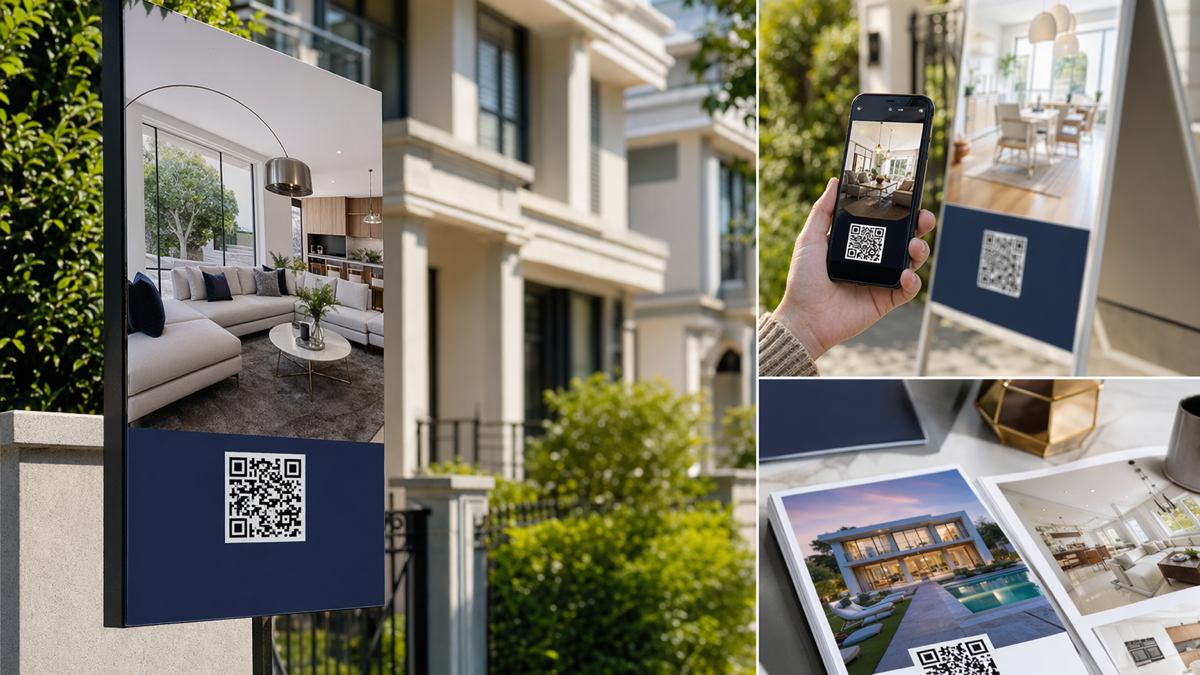
A QR code gives that moment somewhere to go. It turns a board, flyer or window card into a direct route to the listing, viewing form, valuation page or WhatsApp chat. It is not about replacing portals or your website. It is about catching attention at the exact point someone is already curious.
For estate agents, this matters because speed changes the quality of a lead. A buyer who scans outside a property has context. They know the street, the outside of the house and often the neighbourhood. A homeowner who scans a valuation flyer may be standing in the area you want to win. Those are warmer signals than a vague website visit from an unknown source.
QR codes also make printed marketing measurable. Boards and flyers have always been useful, but they have often been hard to attribute. With the right short links, you can see which boards attract scans, which flyer drops lead to valuation requests and which window cards get after-hours interest.
Start with the action you want
The biggest mistake is creating a QR code before deciding what it should do. A code on a board can support several different actions, but it should only ask for one at a time.
Common goals include:
- send buyers to a live property listing
- let people book or request a viewing
- collect interest before a property goes live
- promote similar properties nearby
- send homeowners to a valuation page
- open a WhatsApp or phone enquiry route
- track response from a specific flyer drop
Once the action is clear, the wording becomes much easier. "Scan for photos, floorplan and price" is better than "Scan me". "Scan to book a valuation for this street" is better than a generic logo and code.
People do not scan because they like QR codes. They scan because the promise beside the code is useful enough to interrupt what they are doing.
Using QR codes on for sale and to let boards
Boards are seen by neighbours, local buyers, commuters and people visiting the area. They are already doing one job: announcing that a property is available. A QR code can add a second job: letting interested people act immediately.
The simplest board code links to the property listing. That works well if the listing is mobile-friendly and contains the details people expect: price, photos, floorplan, EPC information where relevant, viewing options and contact details.
A better setup is to use a trackable short link for each property board. If ten houses are on the market, each board gets its own link and code. That way you can see which properties are generating street-level interest, even if those scans do not all become enquiries.
Board wording that works
- "Scan for price, photos and floorplan"
- "Scan to request a viewing"
- "Interested in this home? Scan for details"
- "Scan for similar homes nearby"
Keep the wording large enough to read from a sensible distance. A tiny code in the corner of a board is more decorative than useful. The code needs quiet space around it, good contrast and enough size for phones to read it quickly.
Think about where the board sits. If it is next to a busy road, very few people will stop and scan. If it is on a residential street with foot traffic, the opportunity is stronger. For high traffic roads, the code may still work for passengers or people walking past later, but do not judge every board by the same expectations.
Using QR codes on sold boards
Sold boards are often treated as proof of momentum. They can do more than that. A sold board can speak to nearby homeowners who are wondering whether now is the right time to sell.
A QR code on a sold board should usually lead to a local valuation or case study page rather than the old listing. The message might be: "We sold this property. Scan to see what yours could be worth." That is direct without being too shouty.
If you have permission to mention results, the landing page can include useful context, such as the type of property, level of interest, number of viewings or time on market. Be careful with claims. Do not imply that every nearby home will get the same outcome. Keep the page factual and local.
You can also use a sold board code for a street-specific valuation campaign. For example, the link might lead to a page headed "Thinking of selling in [street or area]?" with a short form for valuation requests. The more local the page feels, the less it feels like a generic lead trap.
Flyers that lead somewhere useful
Property flyers often ask for too much attention. They carry a headline, a photo, a list of claims, several contact details and sometimes a tiny valuation message. A QR code can tidy that up by moving the detail online.
For a buyer-focused flyer, the code can link to a collection of homes in the area. For a seller-focused flyer, it can link to a valuation form, recent sold examples or a guide to preparing a property for market.
The flyer should not simply say "visit our website". That is too broad. Make the scan specific:
- "Scan to see homes for sale within half a mile"
- "Scan for recent sale prices in your area"
- "Scan to book a free valuation"
- "Scan to download our moving checklist"
- "Scan to join our early buyer list"
Door drops become more useful when each batch has its own link. If you deliver 2,000 flyers across four postcode sectors, create four separate QR links. You can then compare response by area instead of treating the whole campaign as one lump.
This is especially useful for agents who test different messages. One flyer might focus on valuation. Another might focus on recently sold homes. A third might invite landlords to review their rental yield. QR tracking helps you see which message earns attention in each neighbourhood.
Window cards and branch displays
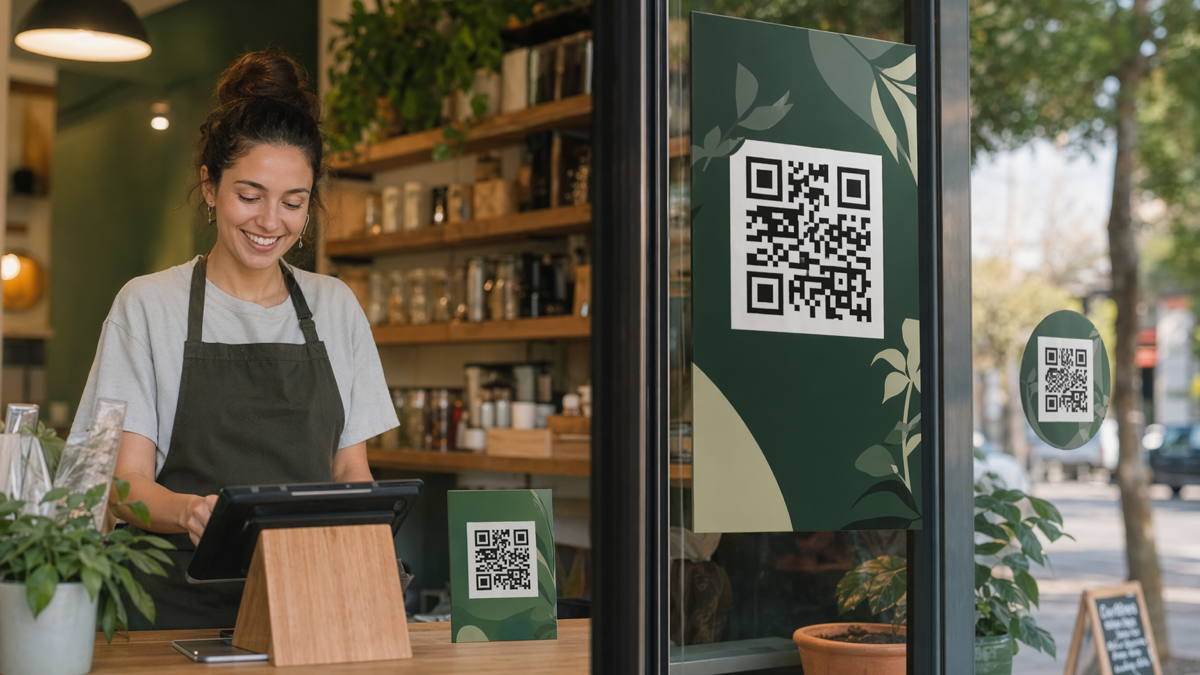
Branch windows still matter in many towns, especially outside office hours. People browse when the office is closed, when staff are busy or when they do not yet want to speak to anyone. A QR code gives them a quiet next step.
Each window card can link directly to its listing. That sounds obvious, but many agents still ask people to search the site manually. A direct scan is smoother, especially if the branch window has several similar properties.
You can also use a larger display code for broader actions:
- browse all homes in the area
- request a valuation
- join the buyer mailing list
- book a lettings consultation
- see mortgage or moving resources
One nice use is an after-hours viewing request page. The window message can say: "Seen something you like after closing? Scan to request a viewing." The page should collect only what you need: name, contact details, property address or reference, and preferred viewing times.
Keep the form short. A person standing outside your branch on a cold evening is unlikely to complete a long questionnaire.
QR codes for landlords and lettings
Lettings teams can use QR codes in slightly different ways. Landlords may scan from flyers, landlord packs, local adverts or branch displays. Tenants may scan from to let boards or property cards.
For landlords, good QR destinations include:
- a rental valuation request form
- a guide to compliance checks
- a page explaining fully managed services
- a landlord switching checklist
- a local rental demand snapshot
For tenants, the code should focus on the property and the next step. Link to the listing, viewing request or application guidance. If a property is likely to move quickly, say so plainly, but avoid fake urgency. People can smell that.
A QR code on a to let board can be especially useful if the listing changes status quickly. If the property is let, the short link can be redirected to similar available properties rather than leaving people on a dead page.
Use dynamic links so print does not go stale
Property status changes fast. A static QR code printed on a flyer or board can become useless if the destination cannot be changed. Dynamic short links solve that problem by letting you change where the code points after it has been printed.
That matters in several situations:
- a property sells and you want the board code to point to a valuation page
- a listing is withdrawn and you want to show similar homes
- a flyer campaign ends and you want to redirect to a newer offer
- a landlord guide is updated and the old PDF should no longer be used
Dynamic links also let you clean up mistakes. If a team member enters the wrong destination before printing, you can fix the link without replacing every flyer. It is still worth testing before print, but having a safety net helps.
Make the landing page match the print
A QR scan creates an expectation. If the flyer says "Scan for homes in St Albans under £500,000" and the landing page opens on your generic homepage, the user has to do the work you promised to do for them.
Match the landing page to the message. If the code is on a board, show that property first. If it is on a valuation flyer, show the valuation form first. If it is on a landlord leaflet, show the landlord content first.
Good landing pages for estate agency QR campaigns usually have:
- a clear heading that mirrors the printed message
- fast loading on mobile
- large tap targets for calls, forms and viewing buttons
- photos that resize properly on a phone
- short forms with only necessary fields
- visible branch contact details
- a privacy notice where personal details are collected
Do not make people pinch and zoom. If the page is painful on mobile, the campaign will leak leads.
Practical design tips for boards and flyers
QR code design is not glamorous, but it matters. A code that looks smart but will not scan is worse than no code at all.
Use these checks before printing:
- keep strong contrast between the code and background
- leave blank space around the code
- avoid placing it over busy property photos
- test at the actual printed size
- test in dull light as well as bright light
- scan from the likely viewing distance
- use a short written link nearby as a fallback
On flyers, a code of around 25 to 30 mm square is often workable, depending on layout and print quality. On boards, bigger is usually better, but it still needs to sit in a place where people can scan safely.
Do not distort the code to fit a design box. If the designer needs more room, change the layout rather than stretching the code.
How to track results without overcomplicating it
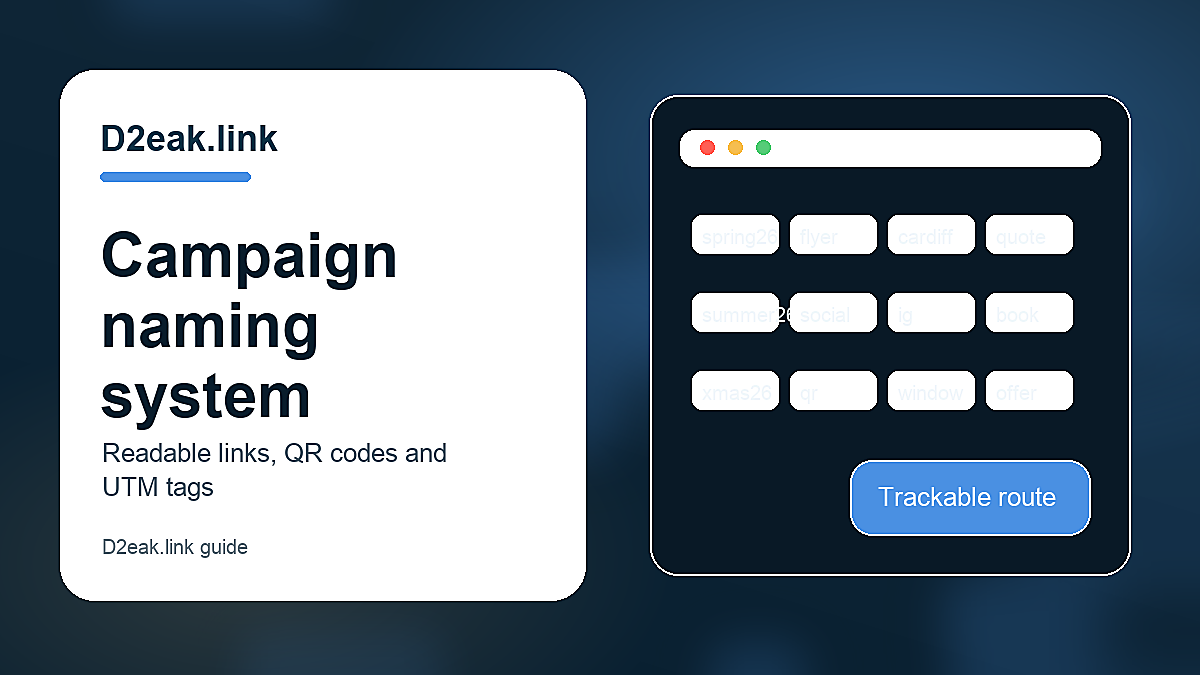
You do not need a huge reporting setup. Start with a simple naming system for links. For example: board_property_streetname, flyer_valuation_area_may, window_card_ref123. Use names your team can understand six months later.
Review a few basic numbers:
- how many scans each code received
- which days or times were busiest
- how many scans turned into enquiries
- which print locations produced valuation requests
- which properties drew interest from boards versus portals
The numbers will not tell the whole story. A person may scan a board, discuss it with a partner and call the next day from a different device. Still, tracking gives you more evidence than print marketing usually provides.
Share the results with negotiators and valuers. If a sold board creates valuation leads on one road, that is useful local knowledge. If a flyer gets scans but no forms, maybe the landing page needs work. If a window card gets after-hours scans, make sure someone follows up quickly the next morning.
A simple campaign estate agents can try
Pick one neighbourhood where you already have activity. Create three QR links: one for a live board, one for a sold board and one for a valuation flyer. Keep the landing pages focused and mobile-friendly.
The live board
Link straight to the property listing with a viewing request button near the top. Track scans from that board only.
The sold board
Link to a local valuation page mentioning the area. Keep it factual and invite homeowners to request an estimate.
The valuation flyer
Send the flyer to nearby homes and link to recent local activity or a short valuation form. Use a separate link for that flyer batch.
Run the test for four weeks. Compare scans, forms, calls and staff feedback. Then decide what to roll out more widely.
Build trust with branded, trackable links
People are more cautious about scanning codes than they used to be, and rightly so. A branded short link printed next to the QR code helps reassure them. It also gives them a way to type the link if they prefer not to scan.
If you want to create trackable QR links for boards, flyers, window cards and valuation campaigns, D2eak.link is built for that kind of job. You can start here: create your D2eak.link account.
Final thoughts for agents
QR codes will not make a poor listing attractive or turn a weak valuation pitch into a strong one. They simply make it easier for interested people to move from seeing to doing.
That is enough to make them worthwhile. A board can become a viewing route. A flyer can become a valuation request. A window card can keep working after the office closes.
Use clear wording, send people to the right page and track each placement separately. The agents who get the most from QR codes will be the ones who treat them as part of the sales process, not as a little square added at the end of a design.
Related reading
If this topic is useful, these related D2eak.link guides are worth reading next: