
Best QR code generators for small businesses in 2026
QR codes have become ordinary, which is exactly why small businesses need to take them seriously. Customers now expect to scan a menu, booking form, payment page, product guide, discount offer or review link without thinking about the technology. The code is no longer the interesting part. The journey after the scan is what matters.
The best QR code generator for a small business in 2026 is not simply the one that creates the neatest square pattern. It should help you avoid dead links, update destinations after printing, understand scans, keep campaigns organised and give customers a page that makes sense on a phone. A free static QR code can be fine for a one-off poster, but it becomes risky when the printed item has a long life.
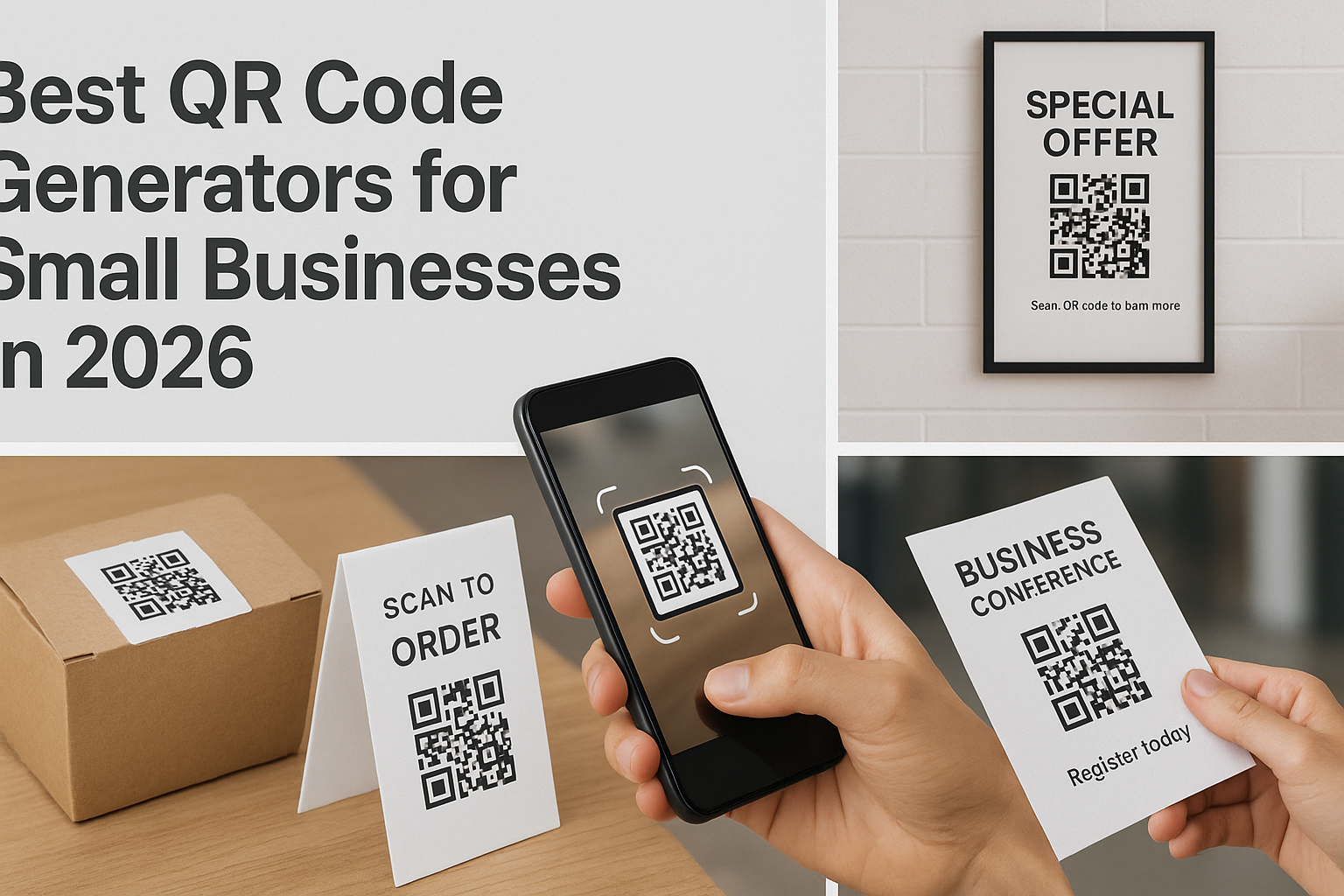
This guide compares practical options for small businesses and explains where D2eak.link fits. The focus is on real use: menus, flyers, appointment cards, packaging, trade stands, shop windows, invoices, event handouts, loyalty schemes and local advertising.
what small businesses should look for
Before choosing a tool, decide how important the QR code will be. A code on a temporary social graphic is low risk. A code printed on 5,000 product labels is high risk. A code used for a seasonal advert needs different handling from a code printed on a permanent shop sign.
The key feature is editability. Dynamic QR codes let you change the destination without changing the printed code. That means a restaurant can move from a summer menu to a Christmas menu, a gym can switch from a joining offer to a class timetable, and a retailer can redirect a sold-out product campaign to a waitlist or related collection.
- Dynamic destinations so printed codes can be updated.
- Scan analytics by campaign, location or time period.
- Clear mobile landing pages for people who scan.
- Branded short links for customers who prefer to type.
- Simple organisation so old campaigns do not become a mess.
- Export formats suitable for print and digital use.
1. D2eak.link
D2eak.link is a strong choice for small businesses that want QR codes to sit inside a broader link strategy. It is not only about generating a code. It helps you create a destination, manage a short link, support printed campaigns and understand how people interact with the route. That makes it especially useful when QR codes appear in more than one place.
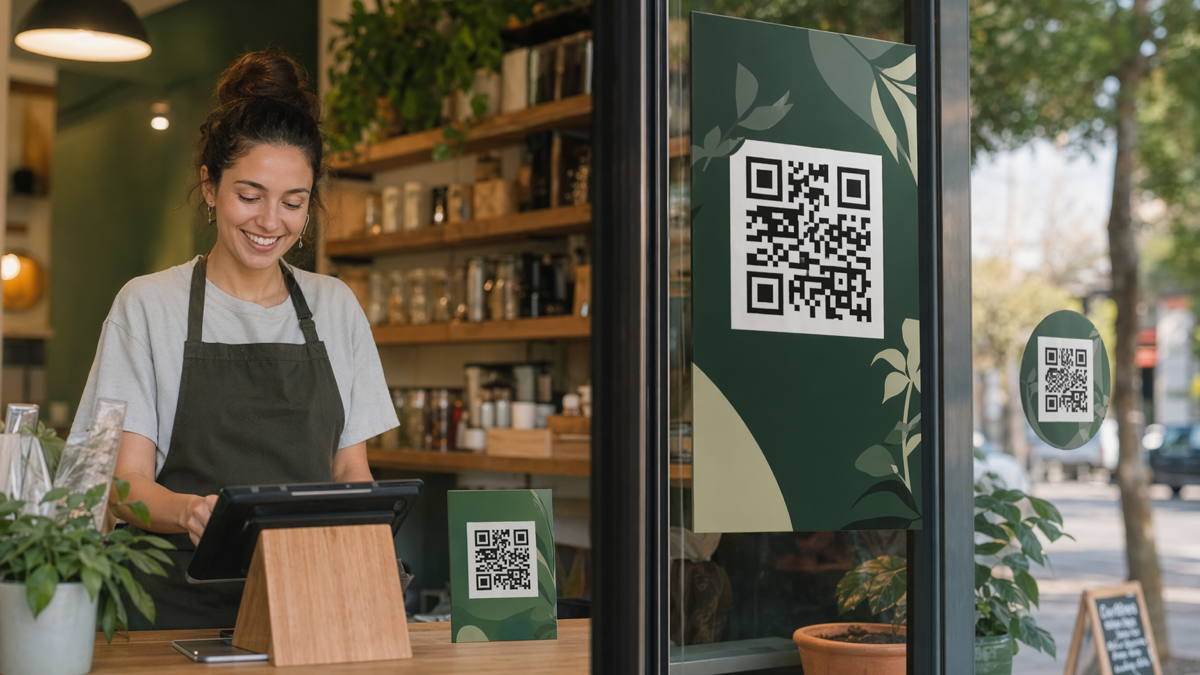
A café might use D2eak.link for a table QR code pointing to the menu, a takeaway flyer linking to online ordering, and a loyalty card linking to a signup page. A clinic might use it for appointment information, review requests and patient forms. A retailer might use it for packaging inserts, pop-up events and product care guides. Each route can be managed cleanly instead of being scattered across different free tools.
The biggest advantage is flexibility after printing. If the destination changes, the business can update the route without replacing every poster, card or label. The short link can also be used alongside the QR code, which is helpful for customers who cannot scan easily or want to type the address later.
best for
- Small businesses using QR codes across print, packaging, events and social profiles.
- Teams that want short links and QR destinations in one workflow.
- Campaigns where destinations may change after printing.
- Agencies managing QR and short link campaigns for clients.
2. Bitly QR codes
Bitly is well known for link shortening and tracking, and its QR code features can be useful for businesses already using Bitly links. The familiar interface and brand recognition make it a safe option for teams that mainly want short links with QR support. It can work well for straightforward campaigns where link tracking is the priority.
The potential downside for small businesses is that Bitly can feel more like a link management platform than a small-business campaign workspace. Depending on the plan and features required, costs and limits may need careful checking. If you mainly need a branded link hub with practical QR routes, D2eak.link may feel more direct.
best for
- Businesses already standardising on Bitly links.
- Teams that prioritise link shortening and broad recognition.
- Campaigns where QR is an extension of short link tracking.
3. QR Code Generator Pro
QR Code Generator Pro is a dedicated QR platform with design, dynamic code and analytics features. It can suit businesses that want a specialised QR tool with many styling and export options. For print-heavy use, being able to download the right formats and customise the code can be useful.
The main question is whether you want a dedicated QR platform or a broader link routing tool. If your QR activity is complex and design-heavy, a specialised generator may be worth it. If your QR codes are part of everyday marketing alongside short links, social bios and campaign pages, D2eak.link may be simpler to manage.
best for
- Print-focused campaigns needing detailed QR styling.
- Businesses that want a dedicated QR management product.
- Teams with regular design support and clear campaign processes.
4. Canva QR codes
Canva is convenient because many small businesses already design posters, menus, cards and social graphics there. Adding a QR code inside the same design workflow is quick. For a temporary code that points to a stable destination, that convenience can be enough.
The risk is that convenience can hide long-term problems. If the QR code is static and the destination changes, the printed design becomes outdated. If analytics are limited, the business may not know whether the code worked. Canva is useful for design, but it should not automatically become your QR management system for important campaigns.
best for
- Quick temporary designs.
- Low-risk codes where the destination will not change.
- Businesses already creating simple marketing material in Canva.
5. Uniqode
Uniqode is a more advanced QR code platform with strong business and enterprise features. It can be a good fit for larger teams, multi-location operations and organisations that need more governance around QR campaigns. It offers the kind of depth that becomes useful when QR codes are part of a wider operational system.
For a small business, the question is whether that depth is necessary. A growing chain, franchise or event operator may appreciate it. A local service business, independent restaurant or small retailer may prefer a simpler tool that combines the essentials without adding an enterprise-style process.
best for
- Multi-location businesses.
- Teams needing advanced QR campaign management.
- Organisations with higher governance or reporting requirements.
6. Adobe Express and other design-led generators
Design-led QR tools are useful when the code is part of a quick visual asset. They lower the barrier for non-technical users and can be enough for simple campaigns. The same caution applies: check whether the code is static or dynamic, whether you can edit the destination, and whether you can see scan performance.
Small businesses often choose the fastest option at design time, then regret it after printing. If the code will live longer than a week, treat it as a business asset rather than a design decoration.
static versus dynamic QR codes
A static QR code contains the final destination. If that destination changes, the code cannot be edited. Static codes can be fine for permanent, low-risk destinations such as a homepage that is unlikely to move. They are poor choices for menus, offers, event campaigns, product launches and anything printed in volume.
A dynamic QR code points through a managed route that can be changed later. This is usually better for business. It also supports cleaner analytics because scans can be counted before the visitor reaches the final page. In 2026, dynamic should be the default for almost any printed campaign with commercial value.
practical QR code ideas for small businesses
- Restaurants: menus, bookings, allergen information, loyalty signup and review requests.
- Retailers: product care guides, stock alerts, warranty registration and collection launches.
- Trades: quote forms, emergency call routes, reviews and maintenance reminders.
- Clinics: new patient forms, appointment preparation and feedback links.
- Gyms: class timetables, trial passes, referral offers and challenge signups.
- Agencies: event landing pages, client campaign tracking and proposal links.
common mistakes to avoid
Do not point every QR code to your homepage. The customer scanned because the surrounding material promised something specific. A menu code should open the menu, not a general landing page. A poster for a class should open the class booking page, not a timetable that makes people search again.
Do not print without testing. Scan the code from the expected distance, under real lighting and with more than one phone. Check the mobile page on a weak connection. Make sure the code has enough contrast and quiet space around it. A beautiful poster is wasted if the code is too small or the destination loads badly.
Do not forget the fallback. Add a short readable link near the QR code, especially on printed material. Some customers cannot scan, some phones struggle with damaged codes, and some people prefer to type later. D2eak.link is helpful here because the short link and QR route can work together.
which QR code generator should you choose?
Choose a design-led generator for temporary, low-risk graphics. Choose a dedicated QR platform if QR management is complex, highly designed or enterprise-scale. Choose Bitly if your team already lives in Bitly and wants QR as an extension of link tracking. Choose D2eak.link if you want a practical small-business setup where QR codes, short links and campaign pages are managed together.
For many small businesses, D2eak.link offers the best balance. It avoids the fragility of one-off static codes, gives customers a clearer route, and helps the business treat every scan as part of a measurable customer journey.
Create your D2eak.link page and build a cleaner, measurable route from every profile, QR code and campaign link.
Before printing your next code, create a short checklist: destination tested, mobile page clear, dynamic route confirmed, readable short link included, scan analytics available, and someone assigned to review performance. That small process can prevent expensive reprints and make QR codes genuinely useful rather than decorative.
Related reading
If this topic is useful, these related D2eak.link guides are worth reading next: