

Most people treat QR tracking as a small detail. They make the link, print the code, add a button, and move on.
That is usually where performance is lost. The link itself is rarely the whole problem. The problem is the journey around it: what the visitor expects, what they see first, how easy the next action feels, and whether anyone can measure what happened afterwards.
How to Track QR Campaign Performance Properly is really about removing that friction. For teams that want to know which print placements are actually working, the aim is not to add another shiny tool. The aim is to make the next step obvious enough that more people actually take it.
This guide breaks the job down in plain English: what to fix first, where D2eak.link fits, what to track, and how to avoid the little mistakes that quietly waste good attention.
Start with the action, not the tool
A better campaign starts with one question: what should someone do after they scan, tap, or click?
That sounds obvious, but it is where many campaigns drift. A flyer sends people to a homepage. A bio link sends everyone to a mixed list of links. A short URL points to a page that was built for desktop visitors, not someone standing in a shop, scrolling Instagram, or checking a quote on their phone.
Choose one primary action
For QR tracking, the primary action might be booking, enquiring, registering, claiming an offer, reading aftercare instructions, joining a mailing list, or opening a specific product page. Pick one. Secondary links can still exist, but they should not compete with the main job.
- Use one clear headline that matches the source of the visit.
- Put the main call to action high on the page.
- Keep supporting links below the main action.
- Track each placement separately so the reporting is not blurred.
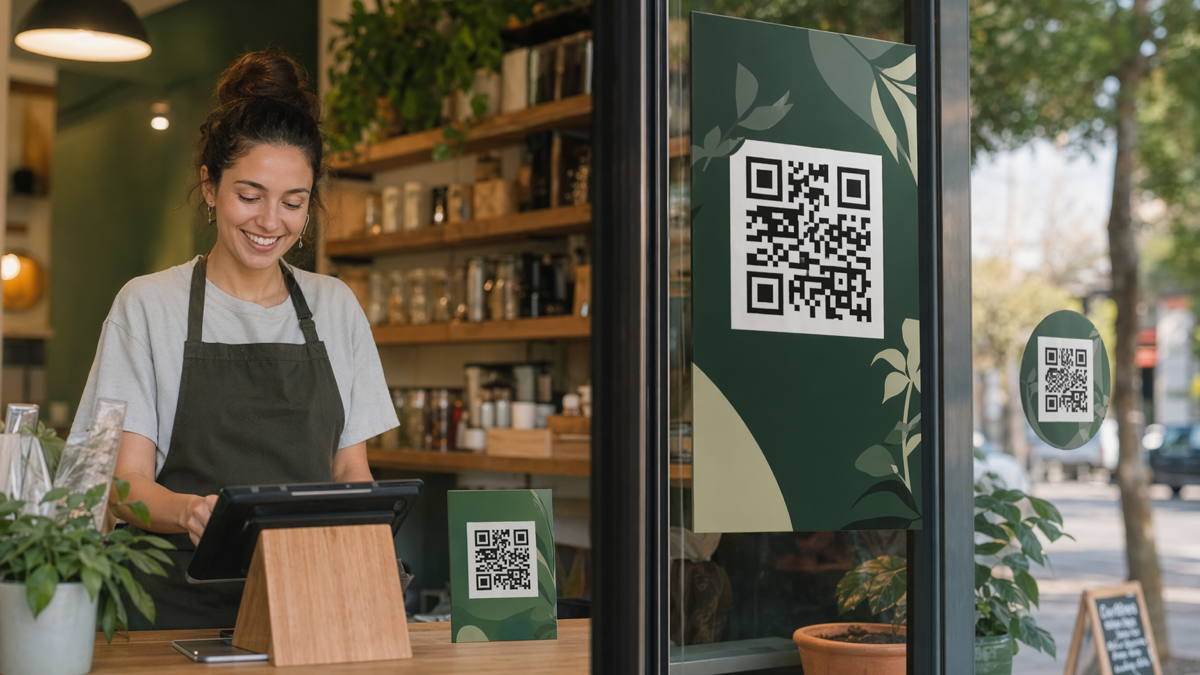
If someone arrives from a QR code on a printed card, the page should acknowledge that context. If they arrive from an Instagram bio, the page should feel quick, visual and mobile first. The less translation the visitor has to do, the better.
Why small journey changes make a big difference
People rarely complain about a clumsy link journey. They just leave. That is what makes this kind of problem expensive: it hides in normal behaviour.
A visitor may be interested, but only lightly. They might be between meetings, in a queue, or checking something while half paying attention. If the page takes too long to understand, asks them to dig for the right option, or looks disconnected from the thing they just scanned, the moment passes.
Common friction points
- The destination page has too many choices.
- The copy talks about the business instead of the visitor's next step.
- The QR code or link is reused across every campaign, so reporting is vague.
- The call to action is hidden below a long block of text.
- The link looks generic, which can reduce trust before the page even opens.
D2eak.link helps because it gives you a cleaner layer between the campaign and the destination. You can create branded short links, build focused bio pages, generate trackable QR codes, and adjust routes without rebuilding the whole campaign every time.
A practical setup for a local business
Imagine a local business wants to turn attention into enquiries. They already have a website, social profiles, maybe some printed material, and a few offers that change through the year. The weak point is not visibility. It is the path from visibility to action.
The messy version
The messy version uses one generic link everywhere. The same URL appears on social profiles, business cards, flyers, email signatures and printed signs. When enquiries come in, nobody knows which placement helped. When an offer changes, old material points to the wrong page. When a campaign underperforms, there is not enough data to learn from it.
The cleaner version
The cleaner version gives each important source its own route. The Instagram bio has a focused bio page. The flyer has a QR code that opens a campaign page. The email signature uses a branded short link. Printed material points to a destination that can be updated later if the offer changes.
- Social visitors see the fastest route to book or enquire.
- Print visitors land on a page that matches the offer they scanned.
- Campaign links use readable branded URLs rather than long tracking links.
- Reports show which sources created real engagement.
Nothing about that setup is complicated. It is simply more intentional. Each route has a job, and each job can be measured.
What to put on the landing page
The destination page does not need to be huge. In many cases, shorter is better. The page should answer the visitor's immediate question and make the next step feel low effort.
A simple page structure
- A headline that repeats the promise from the link, QR code or post.
- One short paragraph explaining who the offer is for.
- Proof, such as reviews, examples, outcomes or recognisable clients.
- The main action button, written in plain language.
- Secondary links for people who are not ready yet.
A common mistake is sending campaign traffic to a full website page that tries to do everything. That can work for research visitors, but it is often too broad for someone coming from a specific CTA. A focused D2eak.link page can act as a lightweight bridge: clearer than a homepage, quicker than a full landing page build, and easier to change between campaigns.
How to track performance without making it messy
Tracking should help decisions, not create a spreadsheet nobody wants to open. Start with the basics.
- Create separate links or QR codes for each meaningful placement.
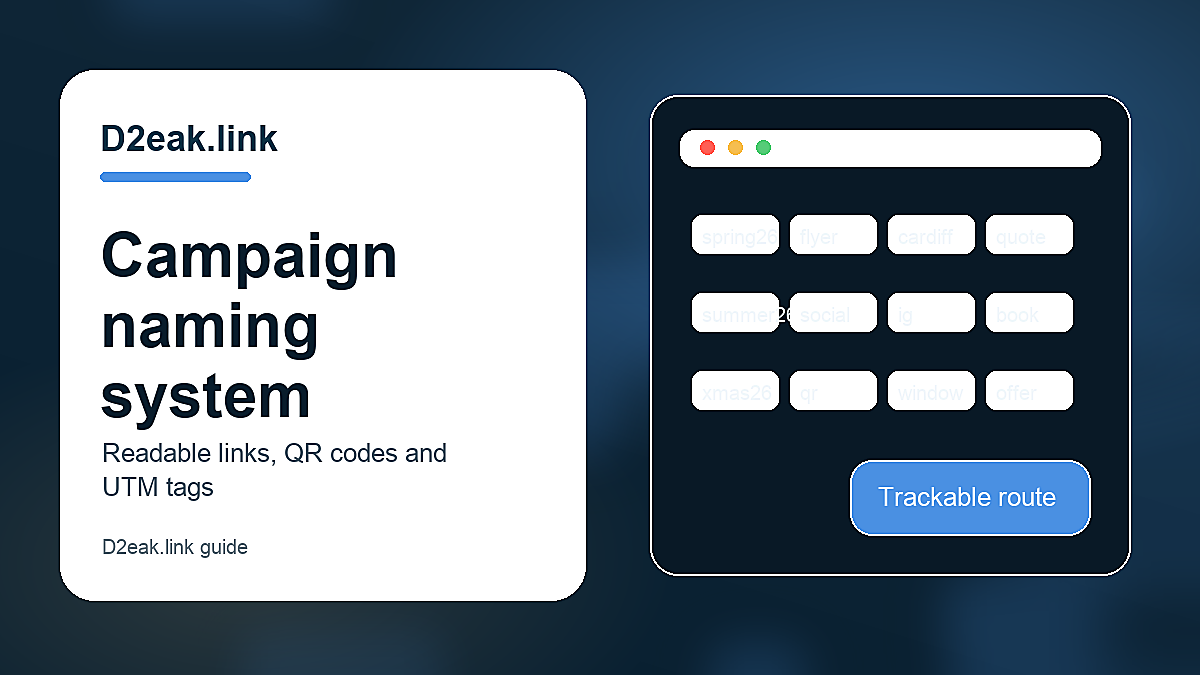
- Name links clearly so reports make sense later.
- Use UTM tags where the destination analytics need them.
- Review scans, clicks and conversions together, not in isolation.
- Retire or rewrite placements that get attention but no action.
The important distinction is between traffic and useful traffic. A QR code that gets plenty of scans but no enquiries may have a weak offer, poor placement, or a destination page that does not match expectations. A bio page with fewer clicks but more bookings may be doing its job better.
What to check each month
Look at which links people use, which placements are ignored, and which pages produce the next action. Then make small changes. Rewrite one CTA. Move one button. Split one QR code into two trackable versions. That rhythm is more useful than rebuilding everything once a year.
Mistakes to avoid
Most weak campaigns fail in boring ways. The good news is that boring problems are usually easy to fix.
- Do not send every visitor to the homepage by default.
- Do not use the same QR code for every placement if you care about reporting.
- Do not bury the booking or enquiry button below unnecessary copy.
- Do not use a long, messy URL where a branded short link would feel safer.
- Do not leave old print campaigns pointing at dead or outdated pages.
The other mistake is chasing too many actions at once. A page that asks people to book, follow, subscribe, read, download and share all at the same time usually gets less of everything. Give the page a primary job. Make that job obvious.
Where D2eak.link fits
D2eak.link is useful when you want one practical layer for the parts of marketing that usually become scattered: short links, QR codes, bio pages and campaign tracking.
That matters because the work is connected. A QR code may need a short branded URL. A bio page may need campaign links. A printed flyer may need a destination that can change later. A marketing report may need to show which source created the click, not just that the website had visitors.
A clean operating habit
For each campaign, create a small set of named links and pages before the material goes live. Keep the naming plain. Add the source, campaign and action. Then review the results after a sensible period instead of guessing from memory.
That habit turns QR tracking from a one-off task into something the business can actually learn from.
Final recommendation
If you already have traffic, attention or offline visibility, do not start by asking for more of it. First, check whether the journey you already have is clear enough.
For teams that want to know which print placements are actually working, the quickest wins usually come from making the next action easier, making the link feel trustworthy, and tracking each important source separately. You do not need to overbuild it. You need a clean route from interest to action.
Build a cleaner link, QR or bio-page journey with D2eak.link.
Once that route is in place, every campaign becomes easier to understand. You can see what people clicked, what they ignored, and where the next improvement should happen. That is the point: less guesswork, fewer wasted scans, and a clearer path for the people who were already interested.
Related reading
If this topic is useful, these related D2eak.link guides are worth reading next: